
At the University of Illinois in Champaign/Urbana, Illinois, and in Chicago
Memories of those days, some 50 years old, swim around in my head in the form of feelings and images. I will try to put words to them in a way that will help you see them, feel them, and imagine dancing to them. If you are close to my age, maybe you will remember them as well.
For my younger readers, those were different times! Let’s begin in the late 1960s when I was getting my degree in Liberal Arts and Sciences at the University of Illinois in Champaign/Urbana. In Campus Town, on Green Street, there was a bar (one of only a couple in C/U) which catered to a mixed crowd. I no longer remember its nam,e and a Google search did not find any definitive information. Gays hung out in the front, sitting and standing along the long bar that filled the front area, and “straights” were in the back, with tables and chairs. In those days, no one was carded for the drinking age. If you were underage, you just ordered a Coke!
Interestingly, there were never confrontations as the straight students passed through the gay students as they made their way to their part of the bar in the back. And the gays were not invisible: some loud, some screamers, some queens, some heavy on cologne, often face makeup and eyeliner, feminine clothing, and of course, some who in those days you might call “normal” gays.
Dancing was not allowed between people of the same sex in those days, but the gays invented “chair dancing” and “in place dancing,” so management didn’t complain. Mixed couples in the back had a tiny dance floor where they gyrated to the current jukebox hits.
The bar closed at 1:00 am on the weekends (earlier during the week). Often, a gay person would announce, “After the bar party at my place and offer their address for those who didn’t know it. These were well attended by the gays, at the parties, with underage drinking and drug use; or maybe during these “different times,” the campus police just didn’t care and ignored the goings on.
A side story: One Saturday, my lover Robert, a friend Rick, and I announced an after-bar party on the next Saturday, which would be at our place, with the additional incentive, “and there will be drag queen performers in attendance”.
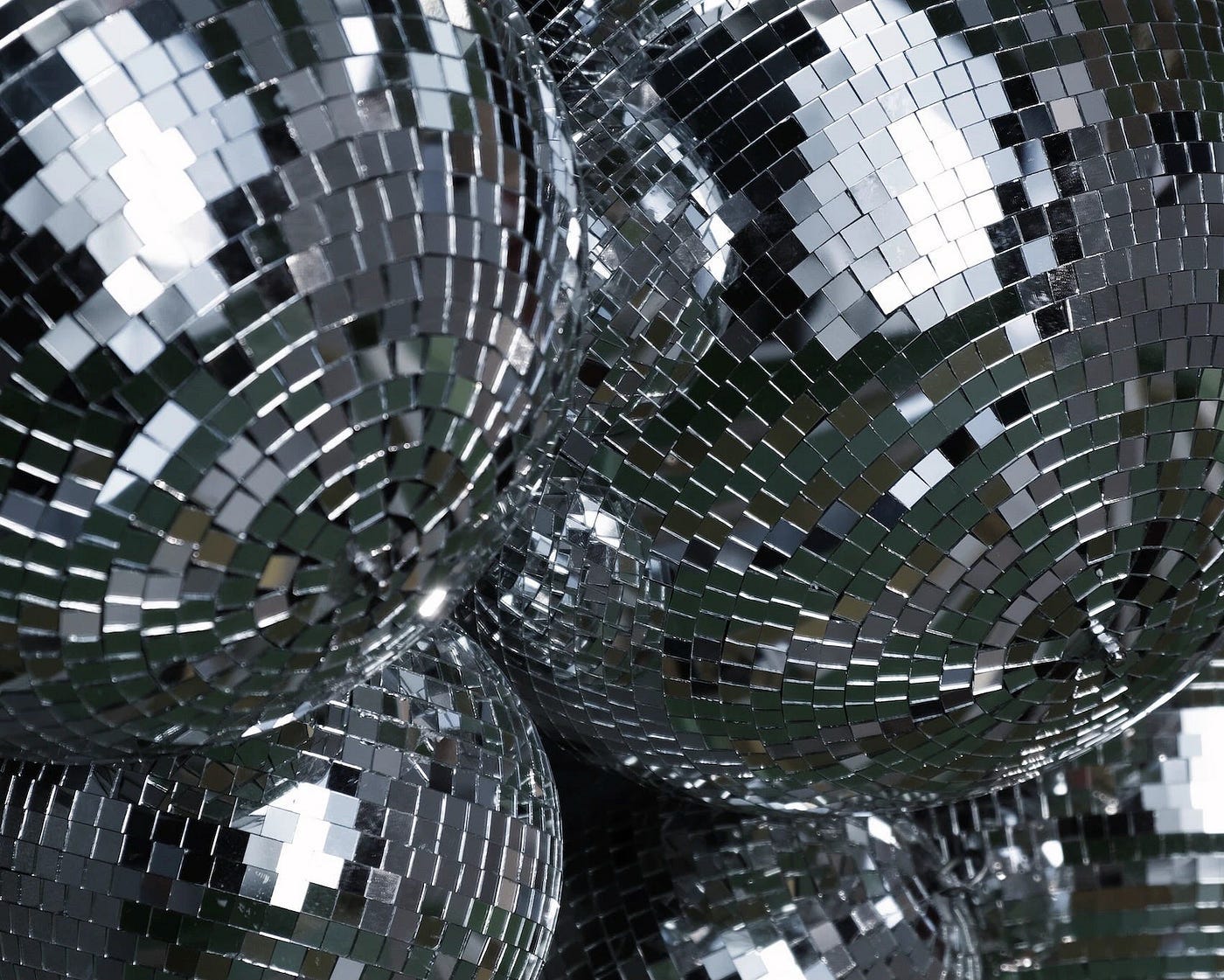
We decorated the rough basement with colored Christmas lights, set up several folding tables with chairs, and created a bar area where people could drop off the liquor they usually brought to share. In the center, as a stage area for the performers, we hung an old screen door lit up with a few portable work lights, placed a planted fern next to the door, and hung an inexpensive mirror ball. We brought our stereo tape player down, and the disco-type atmosphere was ready.
What we didn’t tell anyone is that Robert, Rick, and I were to be the drag queen entertainers in attendance. We had purchased our dresses at the local Salvation Army store, found high heels that fit our masculine feet, decided how to make up our faces, and bought wigs that fit our newly created image.
We each did two numbers with a sister number (the Supremes, of course) between each set. People loved the show, loved us, and had great fun. We were the talk of the town for a long time. I might mention that this type of behavior among college students was not common at the time, at least not in Champaign/Urbana!
In Chicago, where the drinking age was more strictly enforced, one could carry forged ID cards or hang out at the Hollywood Restaurant (interestingly, on Broadway Avenue). The place was well lit, unlike the bars, but it did play disco music, although not as loud as in the bars. The added benefit of being underage was that you could order a cheeseburger or milkshake while you hung out and cruised your fellow underage gays or picked up a trick!
Many years later, in the 1970s, in Chicago, gay life was just beginning to open up. There were a number of gay bars on Broadway Avenue, between Belmont and Fullerton, including a number of drag bars. But there were still no dancing bars, and same sex couples could easily get arrested for acts of intimacy, i.e., dancing together.
There was one dancing bar called Bob’s Bistro A-Go-Go. It was located near downtown in the Old Town Area on Wells Street. The entrance was down a dark alley. There was no sign. One knocked on a door, a panel slid open, and if you looked “safe”, you were admitted. The bar was dark and dingy. A roughly made plywood bar ran along one wall, with no stools. In the corner was a jukebox.
The only reason it worked was that the owners, connected with the Mafia, paid off the police. There was an understanding between the two that to keep things looking “honest”, the police would raid the place now and then. During election years, the raids were more frequent, so the police and city officials appeared to be doing their jobs.
The understanding between the bar and the clients was that they would let people know in advance when the raid would take place, and before letting the police enter the establishment, they would announce “RAID” and flash the lights a few times.
The dancers knew to quickly rearrange themselves, gay boys grabbing the nearest lesbian dyke and lesbian dykes grabbing the nearest gay boy; therefore, no illegal, same sex dancing. If, however, you were underage or caught with drugs on your person, it was fair game for the police to take you down to the station.
Some claim that by the 1970s the glory hippie days were over, but the gay places, including the new Bijou Theater and a bar called Glory Hole (self-explanatory) were glorying (literally) in the newly liberated gay sexual revolution (think lines of guys waiting to get in). Old Town, always raw and raunchy and funky, was becoming the gayborhood. Bijou Blog
By the 1980’s things were fairly wide open. Raids only happened because of suspected underage clients and drug use, and not so much just to hassle the gays. The best place to spend Saturday evening (although open 7 days a week) was Dugan’s Bistro. Same-sex dancing was not allowed without hassle.
There was always a long line to get in. If you arrived early or knew the bouncer or one of the bartenders, or if you were a celebrity, you got in fairly quickly. If you waited long enough, eventually everyone got in.
The Bistro was known for its steel-framed, flashing light dance floor, which wore out and had to be replaced within the first year. Tall stacks of black loudspeakers filled the corners of the dance floor area, and a multitude of mirror balls decorated the place. It was rumored that many dancers developed hearing problems in later years due to the extremely loud music.
Around the perimeter of the dance floor was an elevated area with bars to purchase your drinks and places to sit and watch the crowd. There was a corner stage where go-go boys and drag queens performed. When the Disk Jockey would begin a favorite song, loud screams filled the room as people, already gyrating to the rhythm, ran to the dance floor.
As the evening wore on, more and more dancers were shirtless and in the air-conditioned space, yet humid anyway from so many dancers; perspiration sprayed, the odor of marijuana and poppers prevailed, and cigarette smoke filled the room (not prohibited in those days) with a haze, creating a stimulating, sensual, sexual, exciting environment.
Periodically, another stage would lower from the ceiling with a lip-syncing drag queen, well spot-lit and visible in the haze. Two favorite performers were there almost every night: The Bearded Lady and Wanda Lust.
Another popular dance club was on Broadway Avenue and called “Kristal Blinkers.” The favorite time to go there was for the Sunday Tea Dance. One time, Robert and I took my mom and dad out to Sunday brunch, and as a surprise, took them to a Tea Dance. Mom was a little worried about being there, but Dad loved it. He even danced with Robert. I danced with mom; again, she was a little apprehensive. That is who my mom and dad were in those early days in relation to my being gay, apprehensive about everything I did.
I previously wrote about my experience of dancing at New York City’s famous Studio 54.
I have not been in a gay bar or disco for over 30+ years, so I really cannot tell you what “gay life’ is like nowadays. I do not know where the LGBTQIA+ Community goes to dance, to pick up a trick, or just to hang out. I do know “Grinder” but have never used it.
My gay friends, over the years, hung out at each other’s beautifully furnished condos or apartments, went out to restaurants in the neighborhood or occasionally expensive ones downtown, attended the theater together, celebrated birthdays and holidays with each other, and now and then traveled the world together. These occasions together have slowed down over time.
During the twelve years my husband Gregory (RIP) and I together walked the Dementia path, we were not available for most of these joint activities. Now, I have been a widow for the last eight years, and at my age, I do not care to socialize much, let alone to “trick” around. Also, I feel that relationships are too much work. I have had my one great love, Gregory (RIP), and now enjoy my solitude.
My life is still full with my writing, my friends, my love of cooking, and now that COVID is mostly in the past, I will pick up on traveling, which I do not mind doing alone. I miss the days of “seeking and/or being in love”. But that is OK as I have many, many fond memories to keep me company and to fire my fantasies.
Thank you for sharing this. It’s a window into a version of queer life many of us only hear fragments of. The tenderness in the way you speak about Gregory adds another layer entirely.
Great article, Michael! I felt like I was right there with you.