Previously Published Elsewhere―CHAPTER 3: "Counting Down The Yardstick"
Serialized over the next several weeks

The Carmelite Nun
French Reign of Terror
1793/94
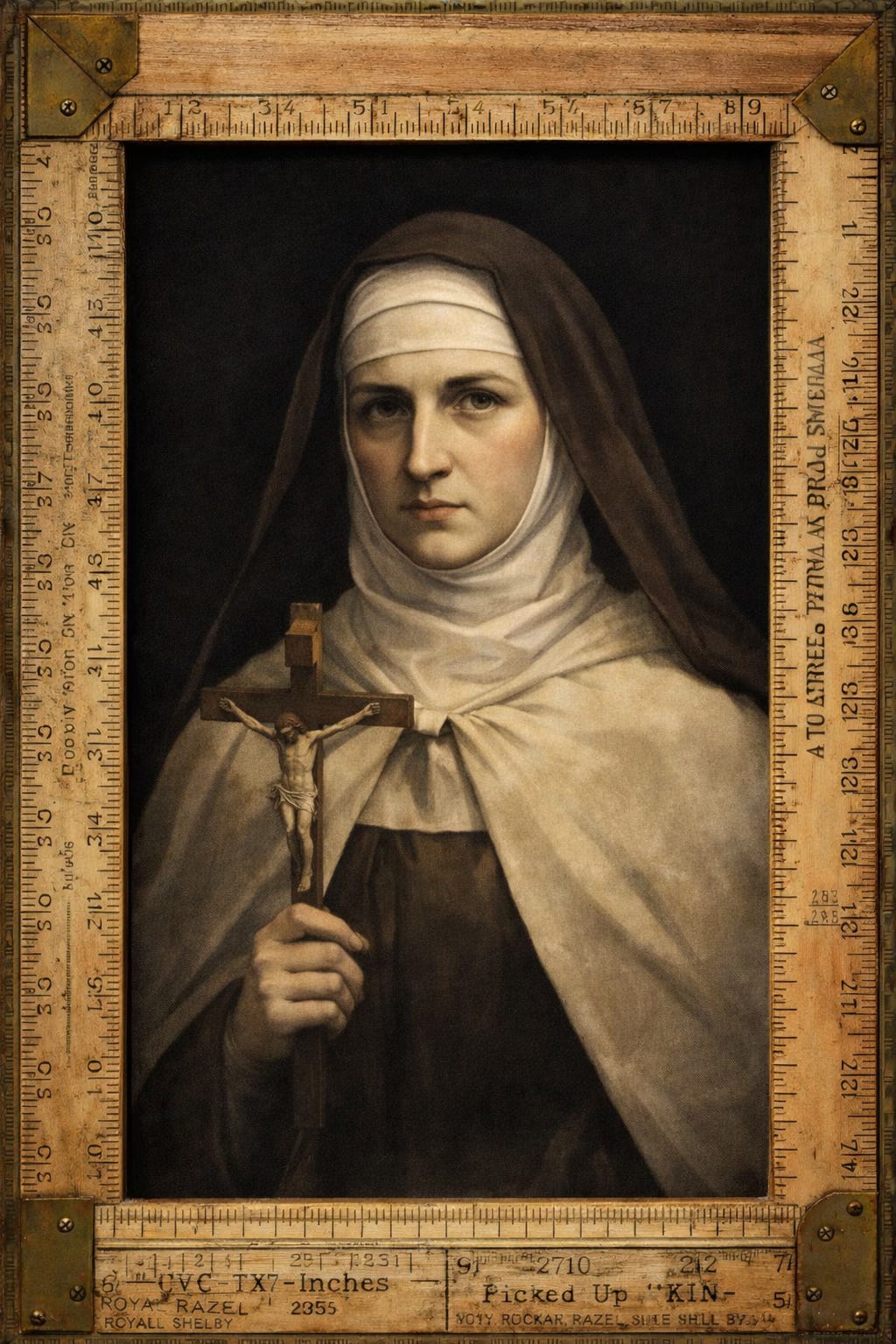
If this is your first time here, I strongly suggest you begin at the beginning.
RECAP: number of years ago, I had a psychic, named Ruth Berger (RIP), whom I visited three or four times in a few years. She was very much in tune with me, and I “felt” her abilities. Even if you do not believe in people’s psychic abilities, our meetings taught me a lot about life, living, and loving.
One time, she offered sessions dealing with “Past Life Regressions,” which were run by a friend of hers who was quite good at conducting this type of psychic adventure. I signed up for one. In our session, as we looked at some of my past lives, I revisited five existences.
Normally, I was a little sceptical at first, but after the experience I became a believer. In no way could I have made up the stories that I told, while in deep meditation (or under hypnosis). To be honest, I amazed myself.
Many years later, I decided to tell these stories in a self-published book, which I titled “Counting Down The Yardstick: A Memoir of Past Lives”. I have decided to share them with you over the next several Wednesdays, chapter at a time, beginning with an introduction to the process the facilitator used for the readings.
Written August 2013, Revised January 2015, Revised again March 2019, Published in July 2020
Dedicated to
Gregory’s dad, Edward (RIP 1997)
Gregory’s mom, Helen (RIP 2001)
My dad, Louis (RIP 2005)
My mom, Adeline (RIP 2010)
Gregory’s brother, Alan (RIP 2014)
My Husband, Soul Mate, Partner, Love, & Best Friend, Gregory, (RIP 2015)
Gegory’s brother, Mark (2017)
My sister, Libbe (RIP 2020)
My brother-in-law, George (RIP 2025)
Pets Broadway, Hoover, Mariah, and Emma, and
Counting Down the Yardstick — Table of Contents
1. The After Life - Before
2. Baker: Renaissance Italian Hill Town - 1600‘s
3. Nun: French Reign of Terror - 1793/94
4: Carny Worker: Traveling Midway Show - Early 1800’s
5. Toe Headed Boy: Small Rural Town - Late 1800’s
6. Farmer’s Wife: Rural Ohio Farm - Early 1900’
7. Renaissance Man: Midwest - Since 1945Chapter 1
8, The After Life - Before
Here then is
CHAPTER THREE
The Carmelite Nun
French Reign of Terror
1793/94
BY: Michael A. Horvich
36... 35... 34... 33... 32... 31... 30... 29... 28... 27... 26… 25... 24... 23… 22... 21... 20... 19... 18... 17... 16… 15... 14... 13... 12... 11… 10… 9... 8... 7... 6… 5... 4... 3... 2... 1…
The Carmelite Nun’s Story
After briefly discussing the “Baker’s Life” with David, he told me to count down again. Picturing a yardstick on my chest, extending upward, I began counting backward. again 36… 35… 34… I do not remember how far I had to count back before my second experience began.
She was not an intelligent woman but rather a deep woman. She was uneducated, but her life experiences more than made up for her lack of schooling. She had always believed in God and did not try to convince others of his existence. She was just there for those who wanted to know, for those in need, and, of course, for Him.
Even as a little girl growing up in the south of France, in a small town called Lyon, she had a need and a talent for nurturing others. She would fix birds’ broken wings, spoon-feed small furry animals nursing them back to health, and sit with the ailing neighborhood children when their mothers were at work.
Anne was loved by her parents, her relatives, her friends, her neighbors. There was something special about this little girl that everyone felt, even if they couldn’t describe why.
People liked to be with her and do things for her, like giving her little toys they carved or the ends of cakes they baked for their own family.
Her life was mostly uneventful except that she lived each day to the fullest, enjoying each day as it unwrapped itself like a most precious gift.
Her mom and dad were both involved in making silks, Lyon’s primary industry. Anne loved playing with the colorful bits and pieces of silk her parents gave her on birthdays and other holidays.
The silk bits were too small to be useful or to wear for warmth, but she loved them for their colors. She would wrap one around a doll and pretend that the doll was rich and going to a party with other rich people.
She would wrap one around a twig from the garden and pretend it was a poor little child she was helping recover from the croup, or yellow fever, or cholera.
As she grew older, she would be called on to nurture people who had those very diseases. She was known to all as patient, loving, and caring. She would go for days on end without sleep, gently patting the sweat off ill foreheads or carefully holding a tin cup and offering tiny sips of water.
Anne nursed her dying father through his last breath and sat by his body for the requisite three days until the burial took place. Her mom had to keep working for fear of losing her job and putting the family at even greater risk.
When her mother succumbed to yellow fever, Anne was on her own. Her life had no real future. She certainly could not imagine herself as a whore selling her love on the streets of Lyon.
She decided to see if the Lyon Convent would take her on as a novice. Sure enough, the nuns had heard of her talent for helping people recover from grave illness and her ability to help people die more comfortably and respectfully. They offered to take her into their community. If she proved herself worthy, they would accept her into the sisterhood, which they quickly did.
She loved her life with her sisters. Her seventy years went quickly. But the times she lived in grew complicated and tough by 1793.
The Reign of Terror, or “The Terror,” saw multiple massacres and public executions of clergy in response to revolutionary fervor, anti-clerical sentiment, and frivolous accusations of treason by Maximilian Robespierre and his Committee of Public Safety.
Between June 1793 and the end of July, there were 16,594 official death sentences in France, of which 2,639 were in Paris. The revolutionary process would topple the absolute monarchy of Louis XVI, divest the nobility of their hereditary power, and ultimately undermine the Catholic Church’s political influence.
Anne was lucky in that she survived while many of her sister nuns were executed by guillotine. Many others were forced by the officials to stop practicing their religious beliefs, but Anne was so strong in her beliefs that she blatantly refused to stop her holy prayers. She continued to nurture others, which, for the most part, defined who she was.
She was arrested in March of 1794 and thrown into a dungeon cell. The cell was cold and damp and dark. She was grateful that there were no rats to keep her company, and most of the time she sat on her narrow cot in the mostly dark cell mumbling remembered prayers.
The small, open window was high above her and let in only a little light even on the sunniest of days. It also let in the cold, but she didn’t mind as she wore her dense woolen habit and wrapped herself in the woolen blanket they allowed her.
Sometimes she could hear the people above, outside the window, murmuring as they passed by, and she would imagine them rushing about, focused on those things they felt were important as they lived during these chaotic times of change.
In the beginning, she found herself missing the grass and trees, the sun and fresh air, the coming and going of life around her. Slowly, she settled into her new, narrow life.
She spent almost all of her time in that dungeon in prayer for others and her God. She realized that she carried the beauty of the world within her and didn’t need to see the flowers or smell the fresh air.
She would wake up early out of habit and go to bed early when the little light the cell window allowed disappeared at sundown. She was secretly happy that she had no other options than to meditate and to pray.
It was a comfortable way to live with no other obligations or responsibilities. She certainly did not miss the housekeeping chores at the convent, the gardening, or the meal preparation. For sure, she did not miss scrubbing the pots and pans or the convent stairs.
She missed a piece of meat or a bite of fresh fruit now and then, but the prison’s bread was recently baked, and the water was cold, that was enough for her.
She would pray, “Forgive me, Father, for I have sinned,” even though there was nothing she could remember that she had done that could be classified as a sin. But it felt good to cover herself for sinning in case there was something that went unnoticed.
She also found herself praying for God. At first, she thought this was strange, but her reasoning went like this: “If God created us in His image, we are like God, and God is like us”.
So that must mean that God, even though most likely on a much higher level, is capable of making mistakes, like us. So, if God is like man and man is like God, then God is not perfect; he needs our prayers and our forgiveness, as he forgives us.
On July 4, 1794, before the night’s darkness arrived, she was sitting in her usual place on the cot, wool blanket wrapped around her shoulders, fervently praying for whoever might need her prayers … when she passed over.
There was no pain, no shock; it was as though time did not skip a beat. One minute she was alive, the next she was dead. The transition was so smooth that she almost didn’t realize what had happened.
She did feel a lightness and some kind of relief, but it lingered in her mind and disappeared so quickly that it instantly became a memory, and then her life on this plane became an emptiness.
The jailer found her sitting upright on the edge of her cot with a peaceful look on her face and possibly the beginning of a smile.
Today’s Memories of Wanting to Be a Nun
I have always wanted to be a nun. Not a priest. Not a monk. But a nun. A Catholic nun. An old-fashioned nun at that. I imagined myself with the flowing black habit, the cross around my neck, and most of my face covered in the highly starched white headpiece with its black veil. My hands are held together in what I interpret to be a holy, pure, loving way. But boys cannot be nuns! Especially Jewish boys.
I remember having had this desire since I was a young boy of eight or nine. I would go shopping with my mother at the grocery store in our neighborhood. I can see it to this day. The store must have been near a convent, as there would often be a nun or two pushing a shopping cart through the aisles.
I watched them, thinking how special they were, how loving and kind and giving and helpful. How close to God. Maybe I was right, perhaps I was wrong. The stories I hear from friends who are Catholic tell me a different story.
I wanted to say, “Good morning, Sister,” but held back from embarrassment. I thought that by greeting her, I would be able to tap into that beauty, that purity, that love. I watched from a distance and, in my child’s mind, fantasized about being a nun. This frightened me, so I just passed them without any greeting.
I didn’t understand what being a nun was about, the ideal and the mundane, but I had a “feeling” of what it meant to be a nun. I wanted to live that feeling.
In my fantasy, a nun is trusting in God. She goes where she is told and does what she is told. Obedient. Doing good works. The order of her life is intriguing. The simplicity of her life is appealing. Being provided for is comforting. But most of all, it is her being a good person, not having “bad thoughts” or doing “bad things,” whatever bad may mean. Not questioning her superiors.
As I grew older, I displaced my desire to be a nun with the behavior of “being nun-like.” There is beauty in accepting life as it comes and being joyful for it. There is contentment in carrying love with you and passing it out to others wherever you go, whenever needed, and under whatever circumstances might present themselves. This was my understanding of “nun-ish-ness.”
I realize that part of my desire to be a nun stemmed from an unhealthy need to be “the best little boy.” Good at everything I did. Loved by everyone. Respected and admired. Able to make all bad into good, all sad into happy, all difficult into easy, all pain (emotional or physical) go away. Perfect!
I also realized that part of my desire to be a nun is my ability to be nurturing towards others.
Now, as an adult, I can be all those things I wanted to be when I wanted to be that nun-boy. I don’t need the habit, just the habit.
If I had to describe who I am today, as a 75-year-old man, I would say I am nurturing, trusting of others, accepting of life as it arrives, hold good thoughts. I can be kind, compassionate, generous of spirit and charity, loving, and giving. I am pleased with the person I am. Perhaps thanks to that French Carmelite Nun, I am who I am.
What impressed me most about the Nun’s passing was how painless and peaceful her death was. In my mind, I had always pictured death as a horrible, painful thing. I now know that even after a difficult illness or a messy accident, the actual passing can be easy as well.
I felt soothed after reading this one, Michael. Something about the simplicity. Her/your simple, uncomplicated faith and acceptance. Thank you!